Website vs Mobile App: Which One Should Your Business Build First?
Confused between building a website or mobile app first? Compare their benefits, costs, use cases, search visibility, and which platform your business should choose first.
A practical Arixa perspective for businesses planning their next digital move.
Many business owners want to grow online but are uncertain about the right first investment:
Should the business build a website first or a mobile app first?
Both can support business growth, but they solve different problems.
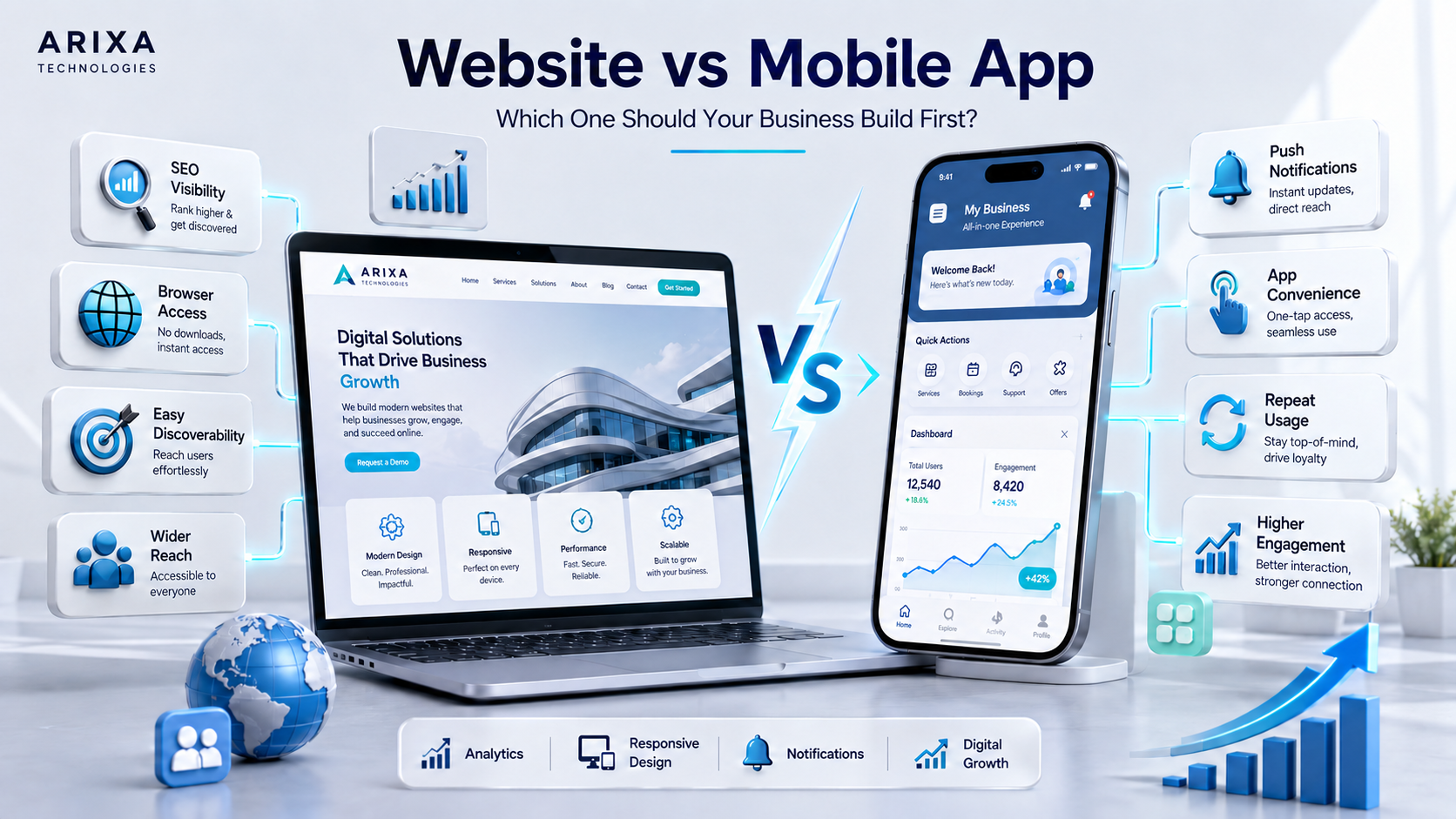
A website helps a business become visible in search, reach new customers, explain services, generate leads, and build trust. A mobile app helps customers interact repeatedly, place orders, manage bookings, receive notifications, and use account-based features.
For most small businesses, the practical starting point is a professional website. A mobile app becomes more valuable when the business has a clear recurring-use case and an audience that will install and regularly use it.
This guide compares websites and mobile apps so you can choose the right platform for your business goals, customer behaviour, and budget.
What is a website?
A website is an online platform that people open through a browser such as Chrome, Safari, Edge, or Firefox.
A business website can include:
- Home and About pages
- Service or product pages
- Contact and enquiry forms
- WhatsApp and call actions
- Location and service-area details
- Blog and SEO content
- Testimonials
- Galleries or case studies
- Customer portals or web application features
A website is useful when a business needs public visibility, clear information, search traffic, marketing landing pages, or lead generation.
What is a mobile app?
A mobile app is software installed on a smartphone or tablet, usually through an app store.
A mobile app can include:
- User accounts
- Product ordering
- Appointment booking
- Push notifications
- Online payments
- Customer dashboards
- Order or service tracking
- Loyalty points
- Chat support
- Personalized profiles
- Offline capabilities
- Device-specific features
A mobile app is most useful when customers have a reason to return frequently.
Main differences between a website and mobile app
| Comparison | Website | Mobile app |
|---|---|---|
| Access | Opens in a browser | Installed on a device |
| Best for | Visibility, information, and lead generation | Repeat engagement and account-based usage |
| Search visibility | Pages can rank in search engines | Primarily discovered through app stores and brand promotion |
| Initial cost | Usually lower | Usually higher |
| Installation | No installation required | User must install it |
| Updates | Published immediately | May require store review and user updates |
| Primary audience | New and existing visitors | Existing or recurring users |
| Marketing strengths | SEO, ads, social links, blogs, and landing pages | Push notifications, retention, and personalized experiences |
The best choice depends on what customers need to accomplish.
Why most businesses should build a website first
For many businesses, a website should be the first digital foundation because prospective customers search online before contacting a provider.
A website can help a business:
- Be discovered through search engines
- Build credibility
- Explain services and products
- Generate enquiries
- Present contact and location information
- Support SEO
- Receive traffic from social media and advertising
- Establish a permanent brand presence
- Start with a comparatively lower budget
Social media profiles are useful, but an owned website gives the business greater control over its content, customer journey, and search visibility.
When should you build a website first?
Build a website first when:
- You are establishing an online presence
- You need customers to discover you through search
- You need to explain services or products
- You want enquiries or quotation requests
- You need a professional business profile
- Your initial budget is limited
- SEO and digital marketing are priorities
- Customers do not yet need recurring app access
Businesses that commonly benefit from a website first include:
- Schools and educational providers
- Clinics and healthcare practices
- Gyms and fitness centres
- Restaurants
- Coaching centres
- Shops and dealers
- Professional service providers
- Software companies
- Interior designers
- Event planners
- Real estate businesses
- Automobile garages
- Agencies and consultants
Review Arixa's website development services for the typical business website scope.
Benefits of building a website first
1. Better search visibility
A website can target search terms connected to the business, its services, and customer questions.
Examples include:
- Website development company in India
- Clinic near me
- School website development
- SEO services for small businesses
- Billing software for businesses
- Restaurant near me
Useful pages, sound technical foundations, and SEO can improve relevant search visibility over time.
2. Lower initial investment
A business website usually requires a lower starting investment than a native mobile application.
The business can begin with essential pages and lead-generation features, then add a CMS, customer portal, booking, e-commerce, or other capabilities as the need becomes clear.
3. Easy sharing
A website URL can be shared through:
- Google Business Profile
- Business cards
- Posters and brochures
- Advertising campaigns
- QR codes
Visitors can open it immediately without installing software.
4. Stronger trust and presentation
A professional website can present:
- Company information
- Services and products
- Customer proof
- Previous work
- Contact information
- Location and service areas
- Business photographs
- Frequently asked questions
This information helps customers evaluate the business before making contact.
5. Digital marketing support
A website supports:
- SEO
- Search advertising
- Social advertising
- Blog content
- Campaign landing pages
- Lead-generation forms
- Analytics and conversion tracking
Advertising is more effective when visitors reach a clear, relevant, and trustworthy destination.
When should you build a mobile app first?
A mobile app can be the first product when recurring mobile interaction is central to the business model.
Consider an app first when:
- Customers need the service daily or weekly
- You already have a defined user base
- Push notifications are important
- Users need accounts
- Customers need order or service tracking
- Booking is a core workflow
- Loyalty or membership features are central
- The business depends on mobile delivery or location features
- Device integrations are required
Examples include:
- Food and grocery delivery
- Taxi booking
- Medicine delivery
- E-learning platforms
- Fitness applications
- Salon booking
- Doctor appointment platforms
- E-commerce brands with strong repeat demand
- Logistics systems
- Hotel booking services
For these models, mobile app development can create a more convenient repeat-use experience.
Benefits of a mobile app
1. Better recurring engagement
An installed app gives customers direct access when they need to order, book, check progress, or manage their account.
2. Push notifications
Applications can send notifications for:
- Offers
- New products
- Appointment reminders
- Order updates
- Payment reminders
- Service alerts
- Relevant promotions
Notifications should be useful and permission-based. Excessive messaging can cause users to disable notifications or uninstall the app.
3. Faster repeat actions
Saved preferences, addresses, accounts, and payment details can reduce friction for repeat orders or bookings.
4. Personalized experiences
An application can adapt content based on account history, preferences, permissions, and activity.
5. Loyalty and membership features
Rewards, points, coupons, referrals, subscriptions, and memberships can support customer retention when they provide genuine value.
Website development cost vs mobile app development cost
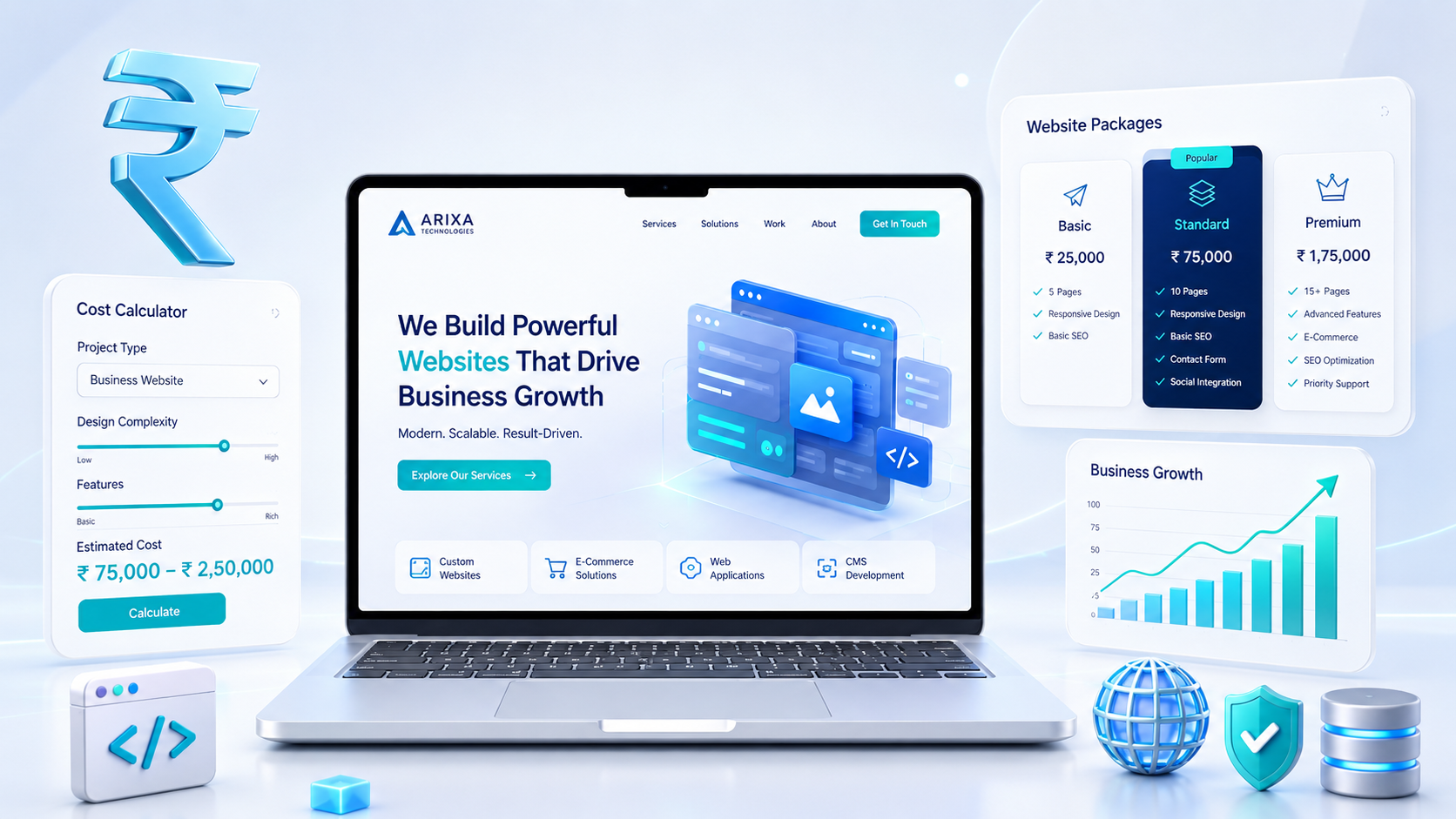
Cost depends on design quality, features, platforms, backend systems, data, integrations, testing, security, administration, and support.
The following are indicative planning ranges for India, not fixed quotations:
| Development type | Indicative cost |
|---|---|
| Basic business website | INR 10,000 - INR 25,000 |
| Professional business website | INR 15,000 - INR 50,000 |
| Dynamic website with admin panel | INR 35,000 - INR 1,00,000+ |
| E-commerce website | INR 50,000 - INR 3,00,000+ |
| Basic mobile application | INR 50,000 - INR 1,50,000+ |
| Advanced mobile application | INR 1,50,000 - INR 5,00,000+ |
| Custom app with admin and integrations | INR 2,00,000 - INR 10,00,000+ |
A detailed scope is required for an accurate quotation. A website is often more affordable for establishing visibility, while an app requires a clear recurring-use model to justify the additional investment.
For broader website pricing guidance, read How Much Does Website Development Cost in India?.
Website vs mobile app for SEO
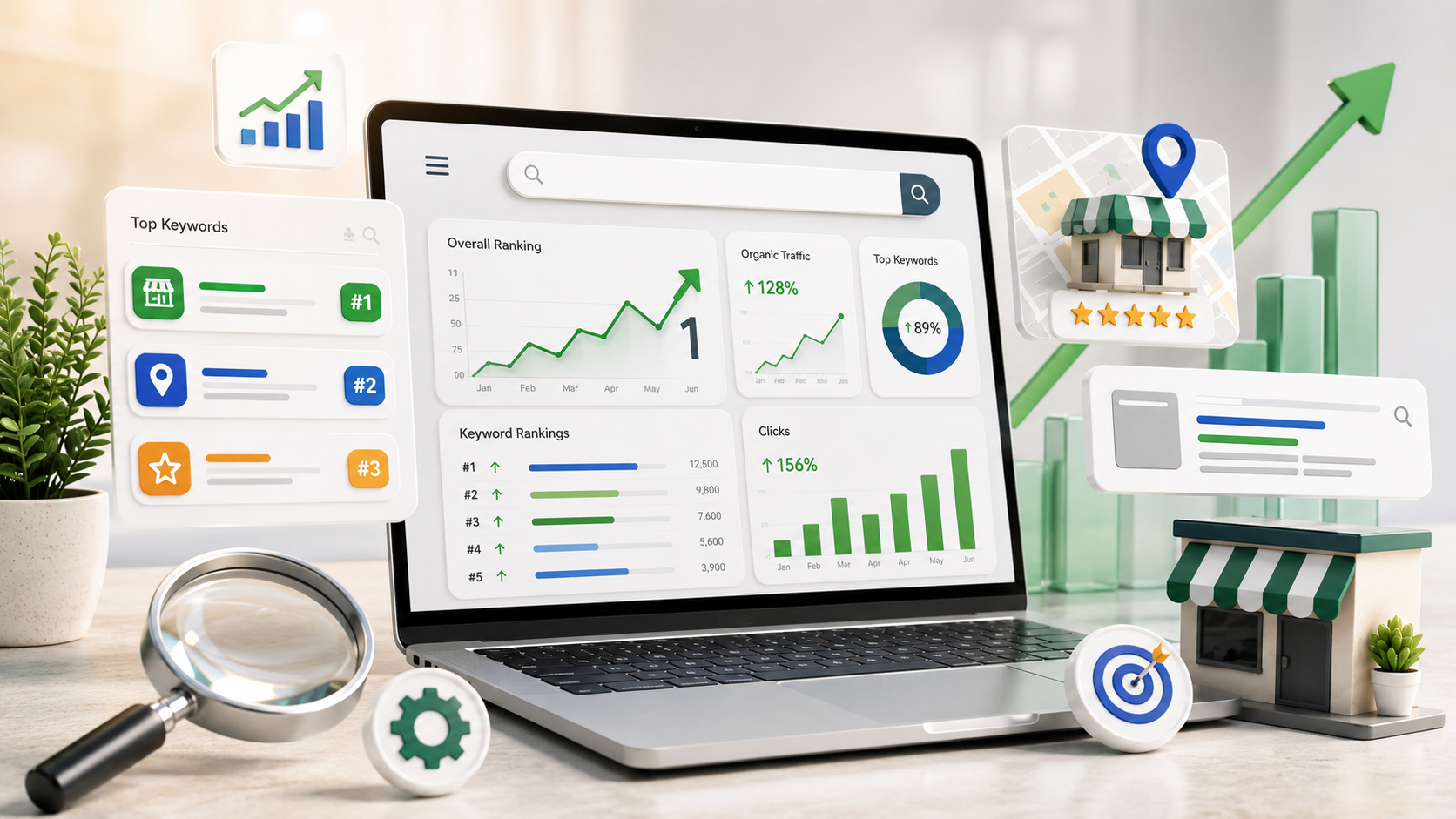
A public website is usually the stronger platform for search engine visibility.
Search engines can index website pages, service content, products, articles, FAQs, and location information.
A mobile app can be optimized for app-store discovery, but it does not replace a search-friendly public website.
Businesses needing both acquisition and recurring customer engagement often use:
- A website for public search visibility
- A mobile app for account-based repeat usage
- A shared backend and admin system for operations
Website vs mobile app for local businesses
For most local businesses, a website is the better first choice.
A local business website can present:
- Accurate business address or service area
- Maps and directions
- Contact number
- WhatsApp action
- Opening hours
- Services
- Customer reviews
- Galleries
- FAQs
This information supports local discovery and helps customers decide whether to contact or visit.
Website vs mobile app for startups
The right choice depends on the startup's core product.
Build a website first when the startup needs:
- Market visibility
- Brand credibility
- Investor or partner information
- Landing pages
- Content and SEO
- Lead generation
- Early validation
Build an app early when mobile interaction is the product itself, such as delivery, transport, tracking, or a mobile-first consumer platform.
Many startups first validate the workflow through a website or web application, then invest in a mobile app after learning how customers use the product.
Can you build both a website and mobile app?
Yes. Many businesses benefit from both platforms.
- A restaurant can use a website for search visibility and an app for ordering.
- A school can use a website for admissions and an app for parents and students.
- A gym can use a website for enquiries and an app for members.
- A clinic can use a website for discovery and an app for appointments.
- An e-commerce business can use a website for search traffic and an app for recurring customers.
The systems can share customer data, content, APIs, administration, and reporting when the architecture is planned properly.
A practical order for small businesses
For many small businesses, a sensible sequence is:
- Build a professional website.
- Establish SEO and accurate business profiles.
- Generate and measure enquiries.
- Add operational tools such as booking, billing, quotation, inventory, or customer management.
- Build a mobile app when recurring customer usage justifies it.
This phased approach controls risk and aligns technology spending with real customer needs.
Common mistakes businesses make
Avoid:
- Building an app before confirming customer demand
- Ignoring website SEO
- Spending heavily before validating the workflow
- Starting without a clear business objective
- Depending only on social platforms
- Omitting lead-generation actions
- Delivering weak mobile website usability
- Ignoring maintenance and support costs
- Selecting visuals without planning the customer journey
- Failing to measure enquiries and conversions
Digital investments should be judged by the business outcome they support.
Which platform should your business build first?
Choose a website first when the primary goal is:
- Online presence
- Search visibility
- Lead generation
- Business credibility
- Service promotion
- New-customer acquisition
- A more affordable starting point
Choose a mobile app first when the primary goal is:
- Frequent customer usage
- Repeat orders
- Push notifications
- User accounts
- Booking or tracking
- Personalized dashboards
- A genuinely app-based business model
For most small businesses, a website is the stronger first foundation.
Why choose Arixa Technologies?
Arixa Technologies provides:
- Website development
- Web application development
- Mobile app development
- E-commerce development
- SEO services
- Custom software development
- Billing and invoice systems
- Quotation management
- Inventory workflows
- Digital marketing
- Brand and creative design
We help businesses select a suitable platform based on customer behaviour, operational needs, budget, and growth plans.
Final thoughts
Websites and mobile apps both support growth, but they are designed for different stages and customer behaviours.
A website is strongest for visibility, trust, SEO, content, and lead generation.
A mobile app is strongest for recurring engagement, notifications, personalized accounts, and advanced mobile workflows.
For most small businesses, building a professional website first is the practical decision. A mobile app can follow when the customer base and repeat-use case are established.
Choose the right platform
Unsure whether your business needs a website, web application, or mobile app first?
Contact Arixa Technologies to discuss your business model, audience, required workflows, budget, and growth plan.
Article FAQ
Questions this topic often raises.
Should my business build a website or mobile app first?
For most small businesses, a website is the better first foundation because it supports search visibility, trust, lead generation, and public information. A mobile app is more valuable when customers need recurring account-based usage.
Is a website cheaper than a mobile app?
In most cases, a website requires a lower initial investment. A mobile app often needs platform-specific development, backend systems, deeper testing, store distribution, and ongoing maintenance.
Can a website rank on Google better than a mobile app?
Public website pages, articles, services, products, and FAQs can be indexed by search engines. Mobile apps rely more on app-store discovery and do not replace a search-friendly website.
Which is better for small businesses?
A website is usually the better starting point for small businesses because it builds credibility, explains services, supports SEO, and generates enquiries without requiring installation.
When should a business build a mobile app?
A mobile app is appropriate when customers need frequent access, repeat ordering, booking, tracking, notifications, personalized accounts, loyalty features, or other recurring mobile workflows.
Can Arixa Technologies build both websites and mobile apps?
Yes. Arixa Technologies provides website development, mobile app development, web applications, SEO, e-commerce platforms, billing systems, and custom software solutions.
Is social media enough without a website or app?
Social media is useful for communication and promotion, but an owned website provides stronger search visibility, structured business information, greater control, and a permanent digital identity.
What is better for lead generation: a website or mobile app?
A website is usually better for acquiring new leads because customers can discover it through search, advertising, social links, referrals, and shared URLs without installing anything.